Every singer/songwriter or musician has a seminal moment at some time in their lives. They hear or see something that makes them want to pick up an instrument and play. For Clint Bradley, it was hearing Marty Robbins sing his gun fighter ballads. He still has a vivid memory of hearing that sound for the first time, it totally captivated and drew him in. He was probably around 9-10 years old and he thinks the first song he learnt the chords to was Running Gun. He later discovered the Sons of the Pioneers, Gene Autry and others and with each step he took further into the world of western music the more enchanted he became.
His early attempts to form a band playing authentic western music fell on stony ground. It proved extremely difficult at that time to convince other budding young musicians to share his passion. Around this time another influence came into his life when he discovered rockabilly music. The excitement and energy of early rockabilly recordings from the likes of Marty Robbins, Johnny Cash, Elvis, Scotty & Bill, Carl Perkins, and others, opened another door in his musical career. At 16 years old it seemed like a natural outlet for him to fulfil his desire to write and play music.
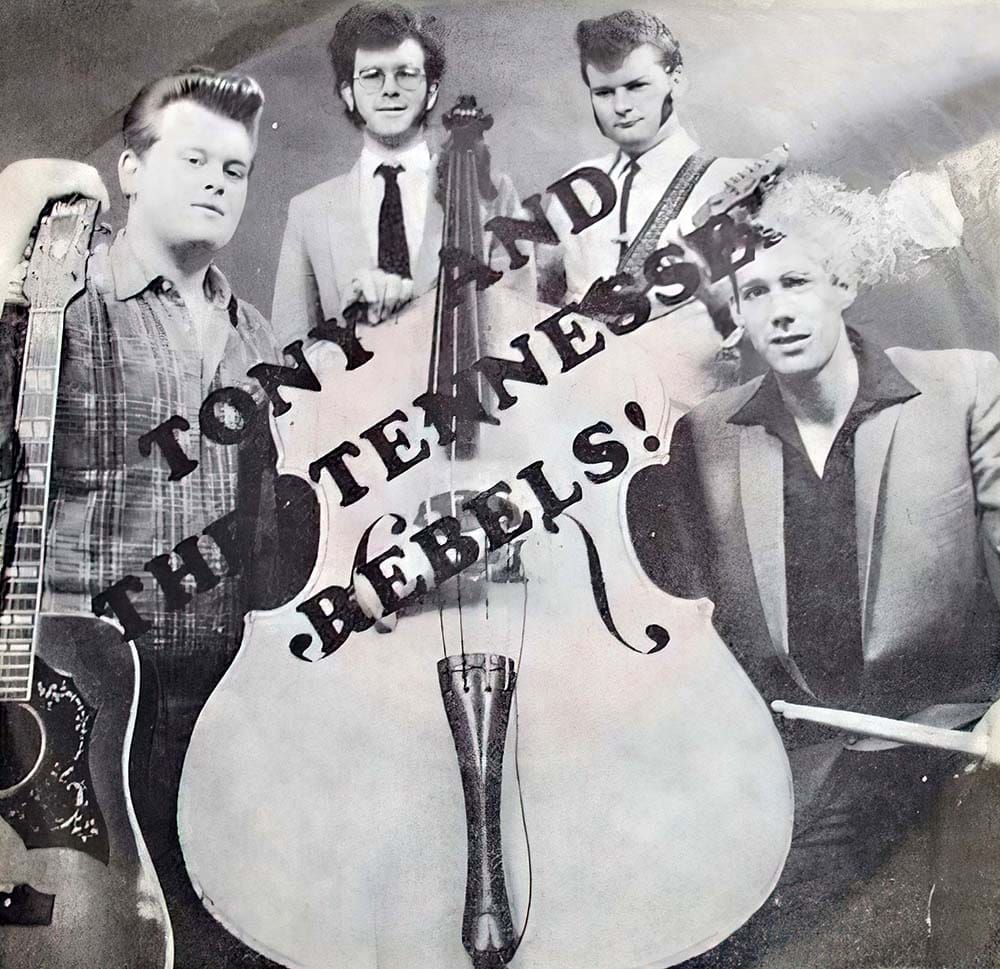
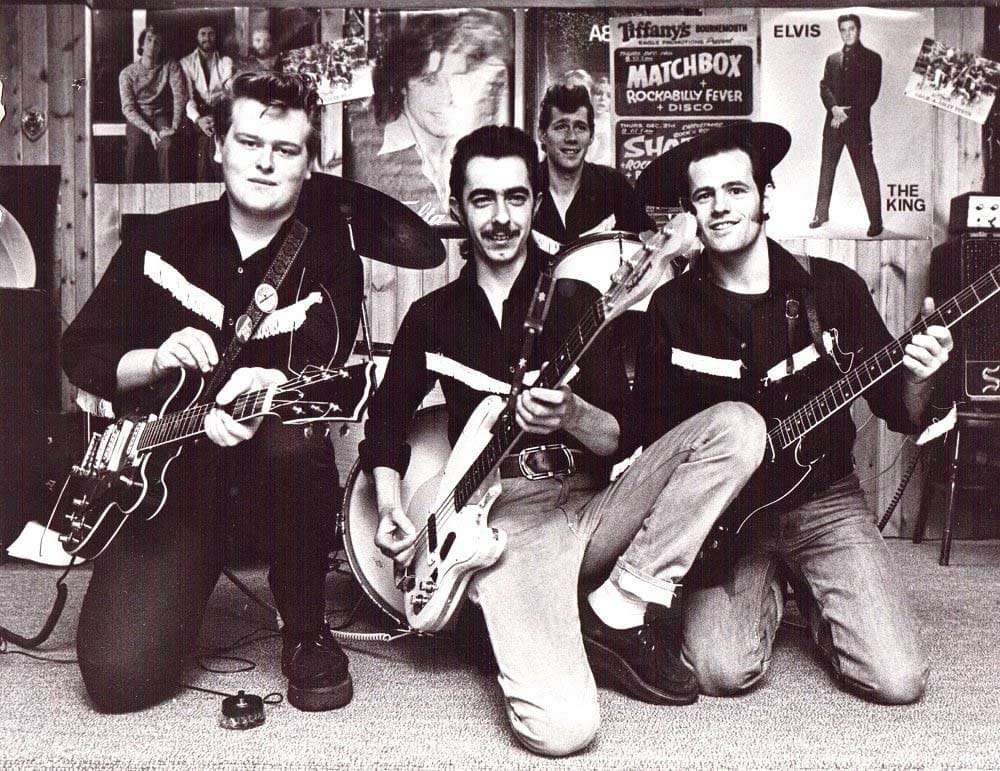
Clint’s ambition was to find a group of young musicians who wanted to play authentic western music but it was impossible to find others of his age with the same passion. He eventually formed his first band in Southampton when he was 16. The line-up was Clint Bradley (lead vocals and acoustic guitar), Steve Noyce (electric bass), Danny Kelly (drums) and Gus Guthrie (lead guitar). Initially the band was working mainly in the Southampton area and played nearly all original songs written by Clint. It was a mixture of Country and rockabilly, the two genres being close relatives. They were quickly signed by a London agent who chose what Clint considers to be a ridiculous name for them; Little Tony and The Tennessee Rebels. He wanted to call the band The Spurdogs or Spur Dog Run but the agent said that name would offend certain factions on the Rock ‘n’ Roll scene.
As they started travelling further afield, including a lot of work in London, many of the original songs were dropped and replaced by what Clint describes as “lacklustre cover versions”. By this time, the Country influence had gone and they were firmly rooted in the rockabilly scene. A year after forming, there had already been a change to the lineup with Mitch Caws coming in on double bass and Bruce Hobbs on lead guitar. In late 1979 they released a vinyl EP for Red Hot Records called Ten Little Women/Slap That Bass. It was released in 1980. The band called it a day later that year due to musical differences but Clint stressed another reason was he really didn’t like the band’s name that had been imposed on him.
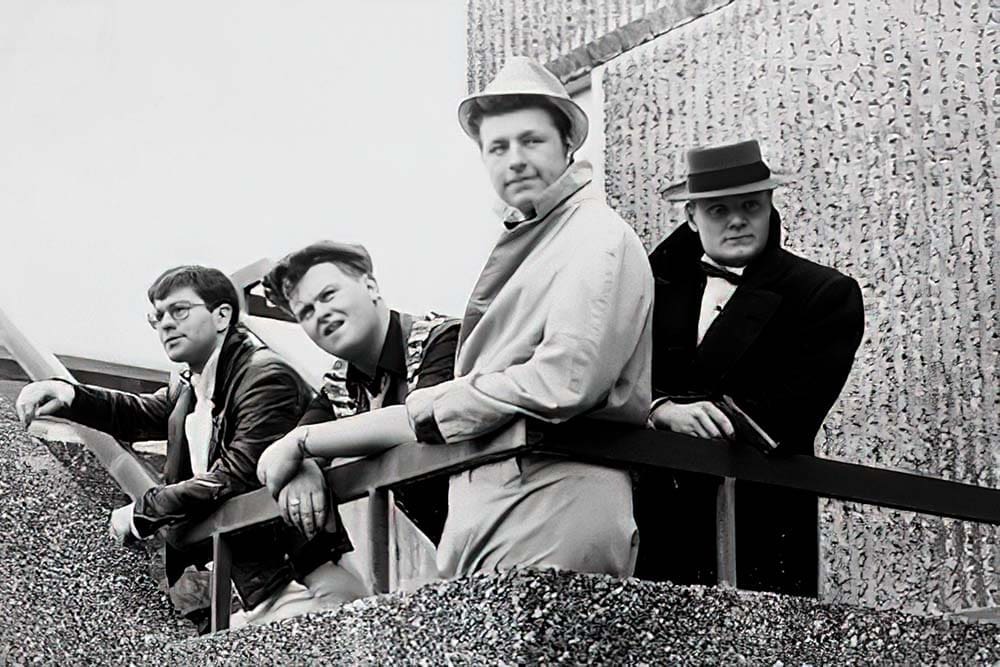
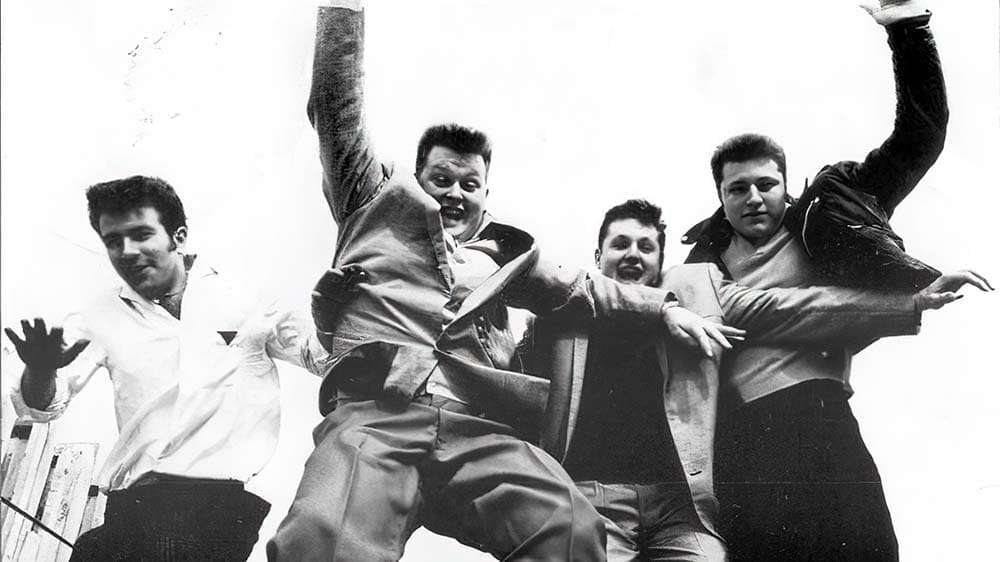
Following the demise of Little Tony & The Tennessee Rebels, Clint was invited to join a reformed Blue Cats. He was still a teenager at that time and eager to get back on the road. Rockabilly band The Blue Cats Trio was formed in 1978 as part of the rockabilly revival following the death of Elvis Presley in 1977. The line up was Dave Phillips (lead vocals and double bass), Carlo Edwards (lead guitar), and Stef Edwards (drums); Carlo and Stef were brothers. They were later joined by Clive Osborne (saxaphone and occasional rhythm guitar) initially as a guest musician. In 1979 they too recorded an EP for Red Hot Records and in the summer of 1980 they recorded their first album, The Blue Cats, in The Netherlands. Before the album was released, Dave Philips left the band to launch his own band Dave Phillips & The Hot Rods.
Having lost their lead singer, The Blue Cats folded. With both bands now off the road, within a few months Tony Martin, who owned Red Hot Records, introduced Clint and Mitch to Stef and Carlo and it wasn’t long before The Blue Cats were reformed with Clint Bradley (lead vocals and acoustic guitar), Carlo Edwards (lead guitar), Mitch Caws (double bass), Clive Osbourne (saxophone) and Stef Edwards (drums).
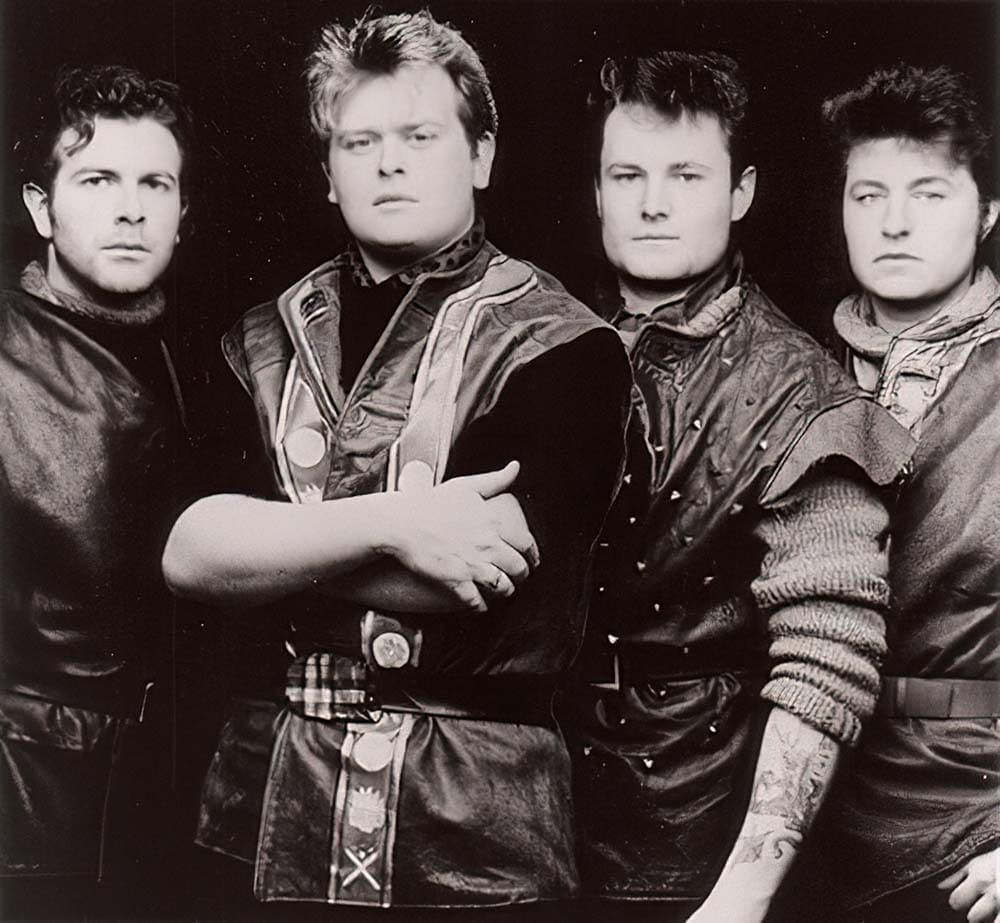
The reborn Blue Cats had their first rehearsal in September 1980 and played their first gig in The Netherlands the following month. The new band had a distinctly different sound to the trio and were labelled by music journalists as neo-rockabilly a term they used to describe the new batch of young rockabilly bands that appeared in the UK in the early 1980’s. Several of these bands, The Blue Cats especially, moved away from playing rockabilly standards and began releasing and playing their own self written work. The energy and youthful spirit of what they did seemed to fit in with the whole post punk scene in the UK. Within a few months, the band build up a new following but Clive Osbourne didn’t like this new direction with original songs replacing 50s cover versions and quickly left the band leaving a quartet.
The Blue Cats released two singles for Rockhouse (a Dutch company), I’m Gonna Die in 1980 and Wild Night in 1981 which was made single of the week by Gary Bushell, who wrote for Sounds magazine at that time. Their first album for Rockhouse, Fight Back followed in 1982. It soon became clear however that Rockhouse were not enthusiastic about the new sound and wanted the band to return to more traditional rockabilly. This was to be their last recording for the label.
By early 1982, their new following had continued to grow, especially around the alternative London club circuit and at this time they recorded a new EP as The G Men and did a few selected gigs in London using that name.
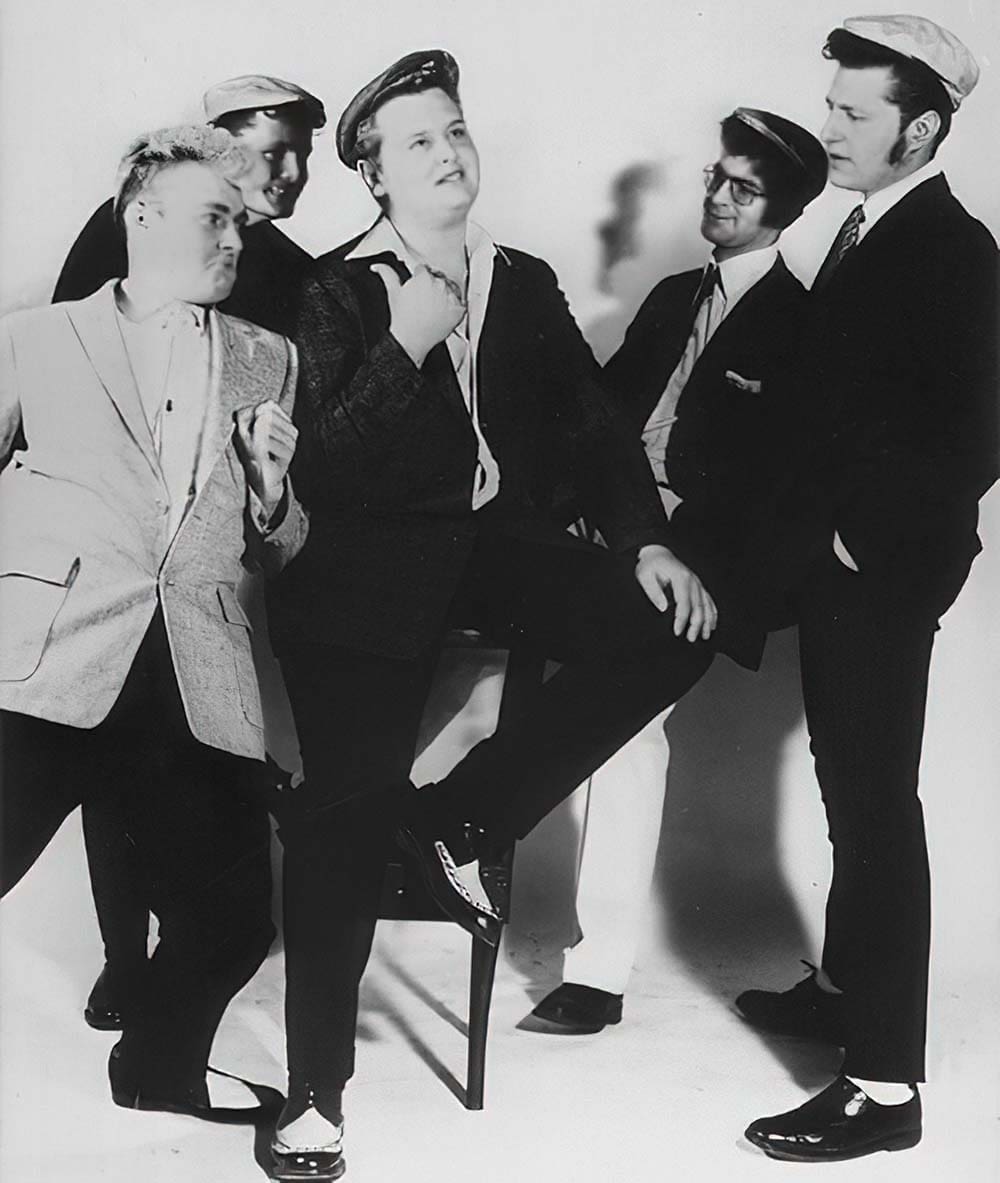
A retrospective album, Early Days Volume 1 was released on Nervous Records (a UK rockabilly label) in 1983. It consisted of 14 tracks, 2 by The South Rebels, 5 by the Blue Cat Trio and 7 by Little Tony and The Tennessee Rebels. Volume 2 was released the same year with a similar mix of old bands and material.
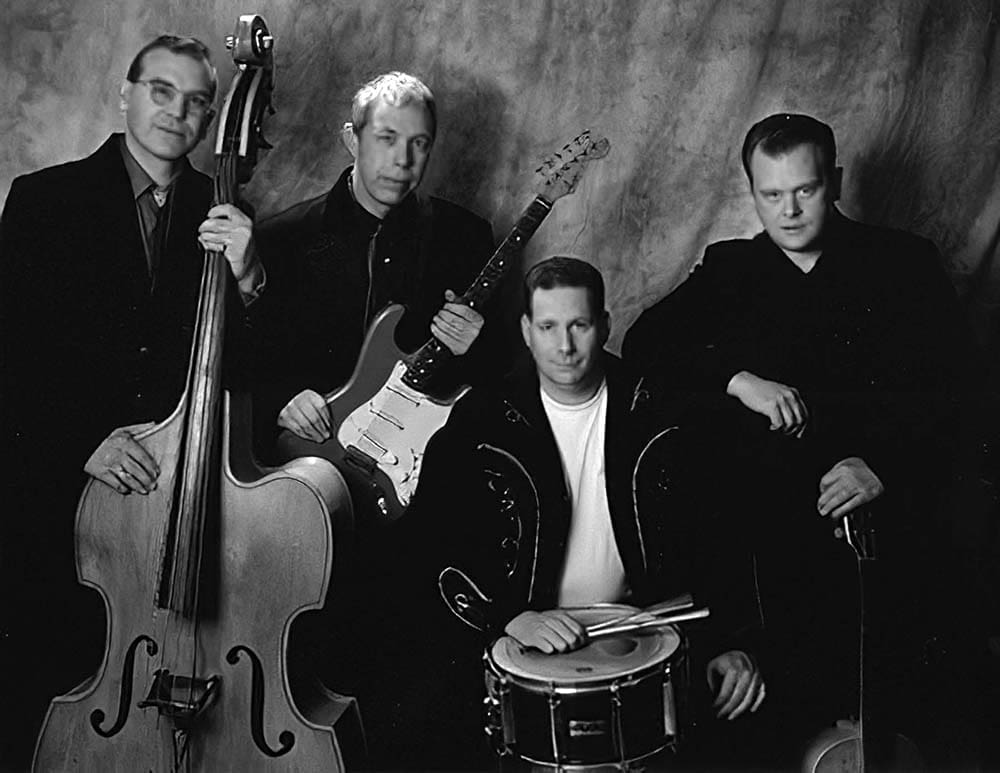
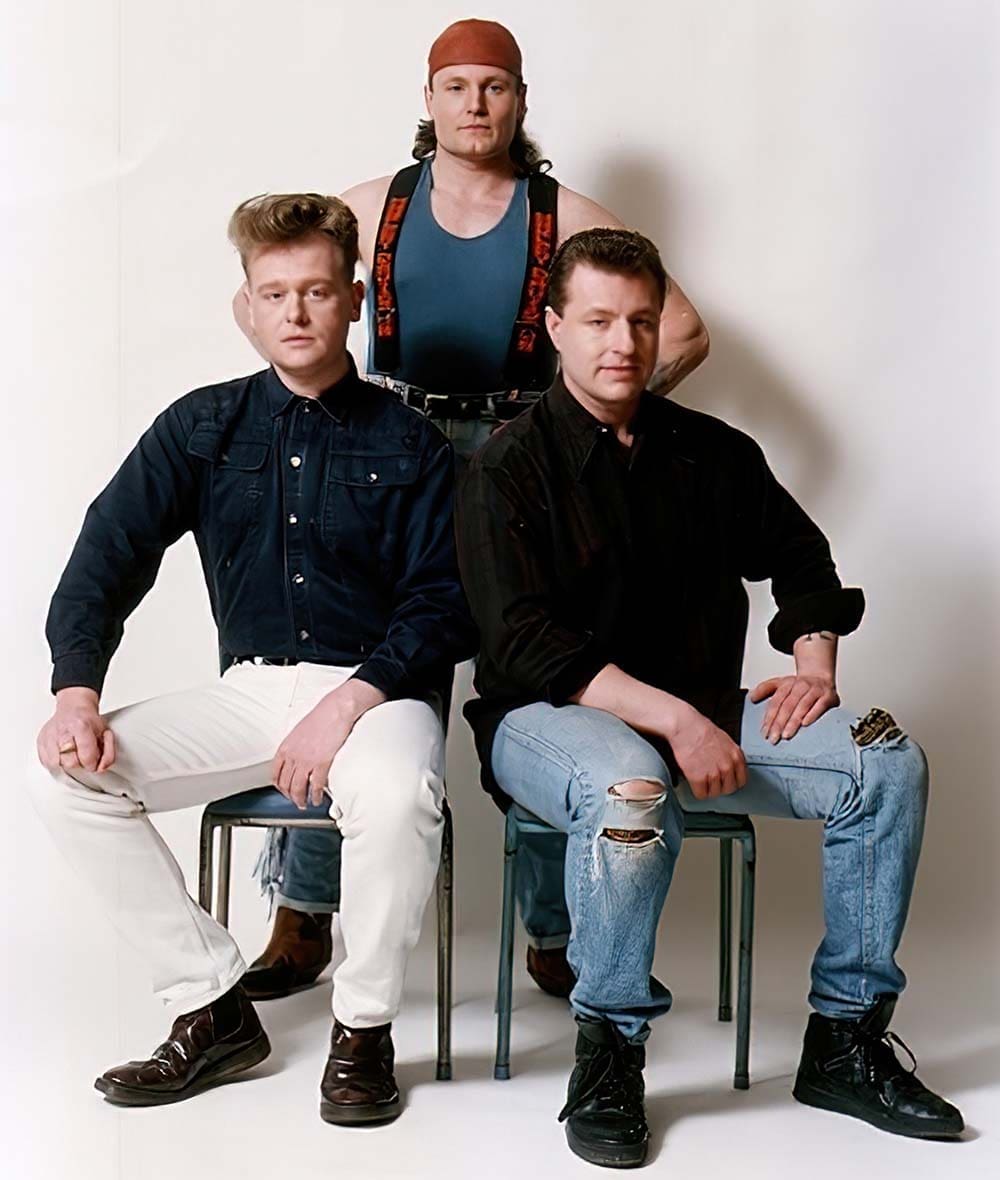
In 1983, The Blue Cats became Beltane Fire, which was an entirely different course. Their first album Different Breed was released on CBS in 1985 with four singles Captain Blood, The Poacher. Excalibur and Fortune Favours The Brave also being released that year. After signing to Sony they toured extensively until around 1989 when they decided to go to the USA. At this time Mitch Caws decided to settle down and chose not to go with them. They went as a trio called Flame Of The West and Clint switched to electric bass. They began playing gigs around Connecticut then New York and New England exploring a more Country rock direction.
During this time, Clint was becoming increasingly frustrated that he was not doing what he really wanted to do, which was to play roots western music. While in the US, he travelled to the Northwest and really started to soak up the western lifestyle and general music scene, which really made him determined to do his own thing.
When Carlo cracked some of the discs in his spine in an accident and had to return to England for an operation they all returned home. They decided to go our own way and pursue different projects, Clint has however remained friends with the other guys in the Blue Cats and they have recorded a couple of newer albums for which Clint wrote some original songs. These included The Tunnel on Nervous records in 1992 when they became a quartet again with the arrival of Paul Diffin on double base. Later albums were Best Dawn Yet in 2012 and On A Live Mission in 2013 both on Bluelight Records. They still play a few shows together each year (mainly in Europe) in between other commitments.
After his departure from the Blue Cats, he set out with an acoustic guitar, with no particular plan in mind other than to sing, play, and write songs and travel. He discovered the acoustic scene along the way, and began to appreciate a lot more about the craft of song writing.
Around 1993-1994, he spent some time in the U.S. sitting in with different bands and doing open mic nights at acoustic venues whenever he got the chance. When he returned to England in 1995 he had a large selection of songs he had written while travelling, so he set about trying to secure a record deal in order to record and release them. He signed with M&G (BMG) records in 1996. He put a band together called The Breeze with the line up Paul Diffin (double bass) and a member of the Blue Cats in 1992, Nick Evans (lead guitar and pedal steel guitar) and his old band mate Danny Kelly on drums.
By now, his western ballad influence was really coming to the fore, but the powers that be were not altogether keen on him making an album that was ‘Too Cowboy’. The album, This Hour was made in 1997, but with massive compromises as M & G didn’t share Clint’s passion for western music. The studio band used for recording the album was Ian Dury’s Blockheads. The label however ceased to exist not long after he completed the record, but not before a promo of one song, Guilty Heart, went out to radio stations. Guilty Heart was released as a 3-track CD single and this song would in time create a whole new audience for him.
Clint considered the experience with M & G to be a gut wrenching disappointment. With the benefit of hindsight, he knows he should have got ‘straight back on the horse’ and gone out and started to gig and build things again, but at the time he was so disillusioned he just wanted to get as far away from all of it as he could. It was at this time he got married and was about to start his family. As this demanded a regular income, he dropped out of all playing and began working on soundtracks and commercials in order to earn a living.
After some time away from the public eye, he began to notice things showing up on the internet. Guilty Heart had begun to gain some notoriety on a few stations in Europe. As it did, he received numerous requests for information and how to purchase This Hour and other tracks he has written and recorded since. In response to these requests, and as a vehicle to make his music accessible to all those who want to hear it, in 2008 he set up a web site https://clintbradley.co.uk/ and immediately the emails started flooding in, and he was very grateful to receive them. It lifted his spirits from the dark corner in which they had been residing for some time, and he immediately felt the urge to write and play his own materiel again.
Prior to reviving his band, Clint wanted to record and release some of his newer songs. He recorded 9 tracks and the CD album Cross A Soul With Silver was released on his own Spurdog label in 2011. Spurdog was, of course, the name he originally wanted for his first band Little Tony & The Tennessee Rebels. The musicians were the same as those who played on his This Hour album.
He was now ready to go back on the road with his band. Unfortunately he was no longer able to use The Breeze as the name for his band. In 1992 an existing punk band was renamed The Breeze, with Darren Busby fronting. Darren quit The Breeze in 1995 but not before finding a very worthy replacement. Gary Perkins was looking for a young band to work with and it wasn’t long before Gary Perkins and The Breeze began their Country journey. With The Breeze not available Clint launched the first line up of the Clint Bradley Band in 2012.
Two albums followed, Riding After Midnight in 2014 and Soul Of The West in 2019. With an EP Everything That I Hold Dear in 2022. All are on Bluelight Records (a Finnish company founded in 1984) and are available as CD albums (or single) or on vinyl. All these albums and the EP can be bought at gigs or ordered on line. Clint is also hoping to get back the rights to This Hour.
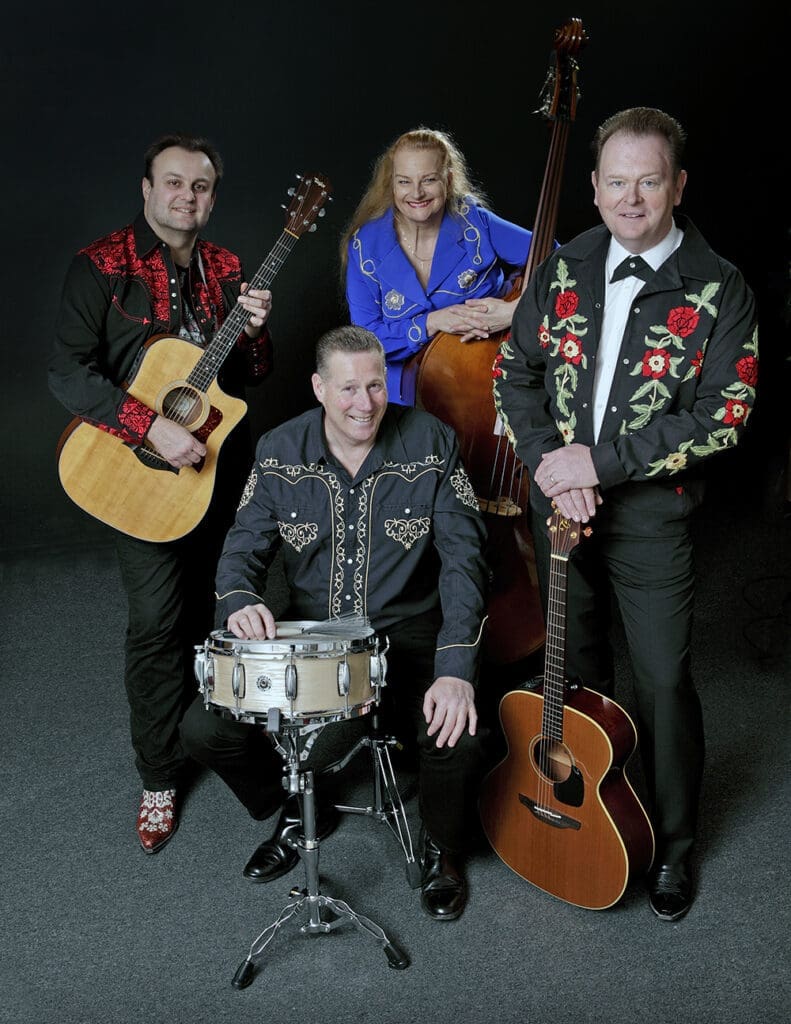
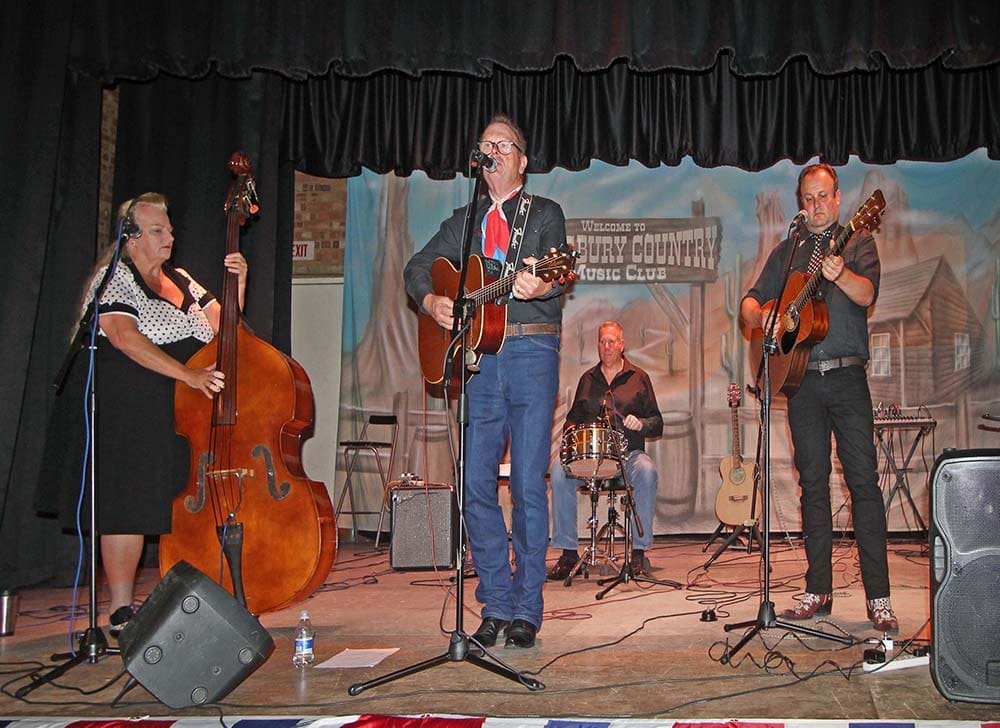
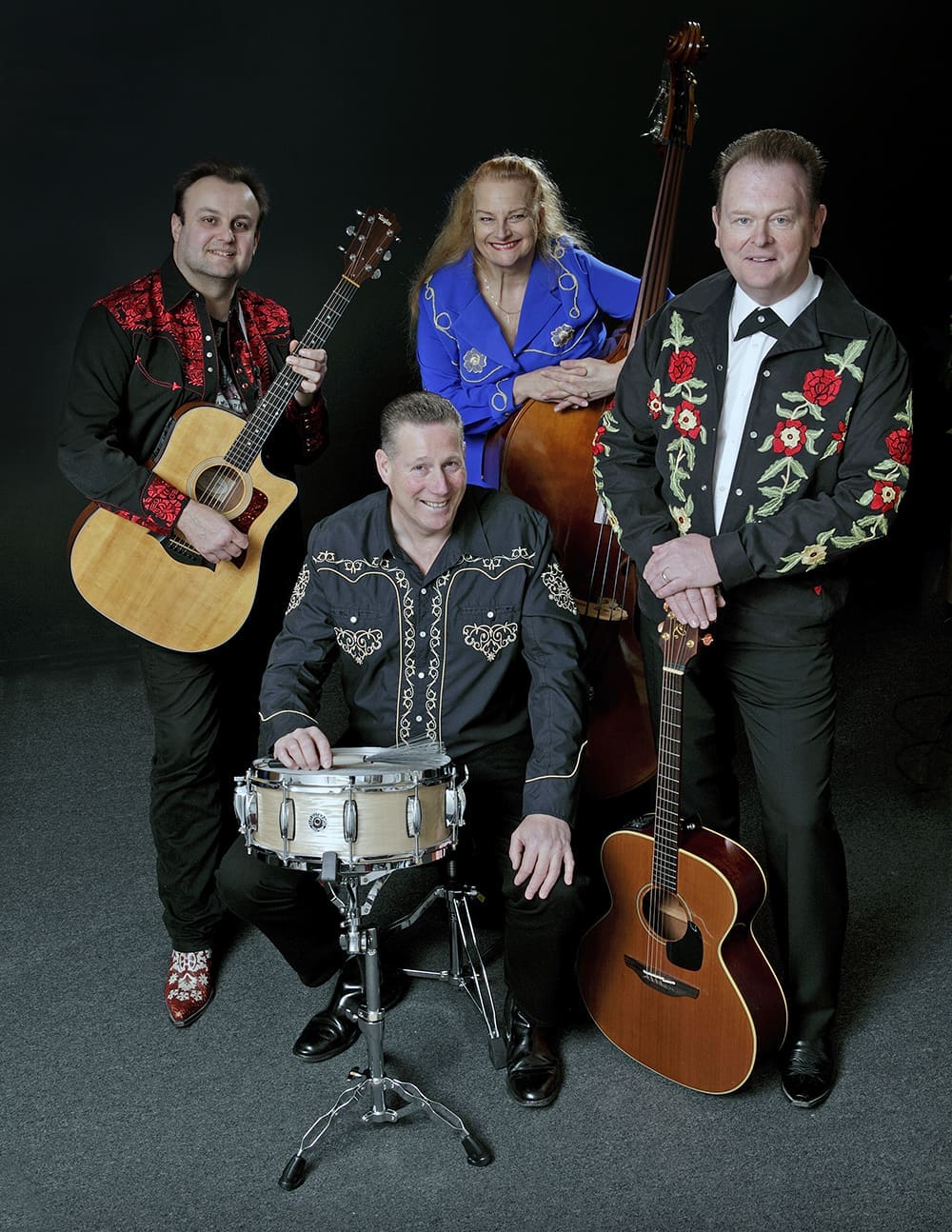
Since 2015 the lineup of the Clint Bradley Band has been Clint Bradley (lead vocals and rhythm guitar), Dave Luke acoustic lead guitar, mandolin and harmony vocals, Connie Everard (double bass and harmony vocals) and Danny Kelly (drum)
In 2023 The Clint Bradley Band won the CCN Horizon award for up and coming band on the country circuit. This year they have been nominated for a CCN Band Of The Year award for 2024.
Research by Nick Catford.
The Band
Dave Luke Danny Kelly
Although Dave Luke grew up with a love of country music, his first band The Sticky Buscuits formed with a group of friends in 1989 was a covers band. Although only an amateur band they were offered some gigs in Czechoslovakia and East Germany in summer 1991, shortly after the end of the cold war. Their bass player knew Roger Humphries who was a sound engineer with a PA system and a van. Roger offered to drive them to Jablonec which has the nickname ‘Czech Nashville’ Roger naturally got up with the band and sung a few songs with them, the Czechs loved his authentic country style and Roger ended up fronting the band with Sticky Biscuits as his backing band. The band folded shortly after they returned to the UK.
Early 1992 Dave walked into a record shop in St Pauls Cray, Kent. At the time he had finished college and was unemployed. Behind the counter was Ed Pearson, lead singer of Memphis Roots. He said he knew of a local Country band who were looking for a guitar player. Within a few days, Dave had joined his first Country band, Steve Scott & Rio and was quickly playing the CMC circuit six nights a week. Later that year, he met Chuck Micallef, a Canadian living in Staffordshire and they began a friendship and eventually a musical partnership that has lasted to this day.
Dave’s time with Rio was short, he left in 1993 and was replaced by Roger Manning. He started playing in a duo with Errol Walsh, which led to the formation of The Coyotes. They got a record deal with Round Tower Music releasing a CD album Coyotes in 1996. The duo later evolved into a 4-piece band comprising Errol Walsh (vocals and rhythm guitar), Dave Luke (lead guitar, baritone guitar and vocals), Steve Simpson (guitar, fiddle, mandolin and vocals), Malcolm Hoskins (bass) and Willie Wilson (drums). Steve Simpson had played in Ronnie Lane’s Slim Chance and Willie Wilson had been a member of Sutherland Brothers and Quiver. The following year the The Cayotes won the BCMA album of the year award. The same year the band folded when Dave moved to Mid Wales where he still lives. Soon after relocating, Iona & Andy invited him to play at their festival in Llandudno. There he was introduced to US singer Gail Davies and became a member of her touring band, which still continues occasionally to this day. He toured Europe and the USA with Gail, including venues such as The Grand Ole Opry, Ryman Auditorium and Kerrville Folk Festival. He also played gigs with Nashville-based bluegrass artist Kathy Chiavola.
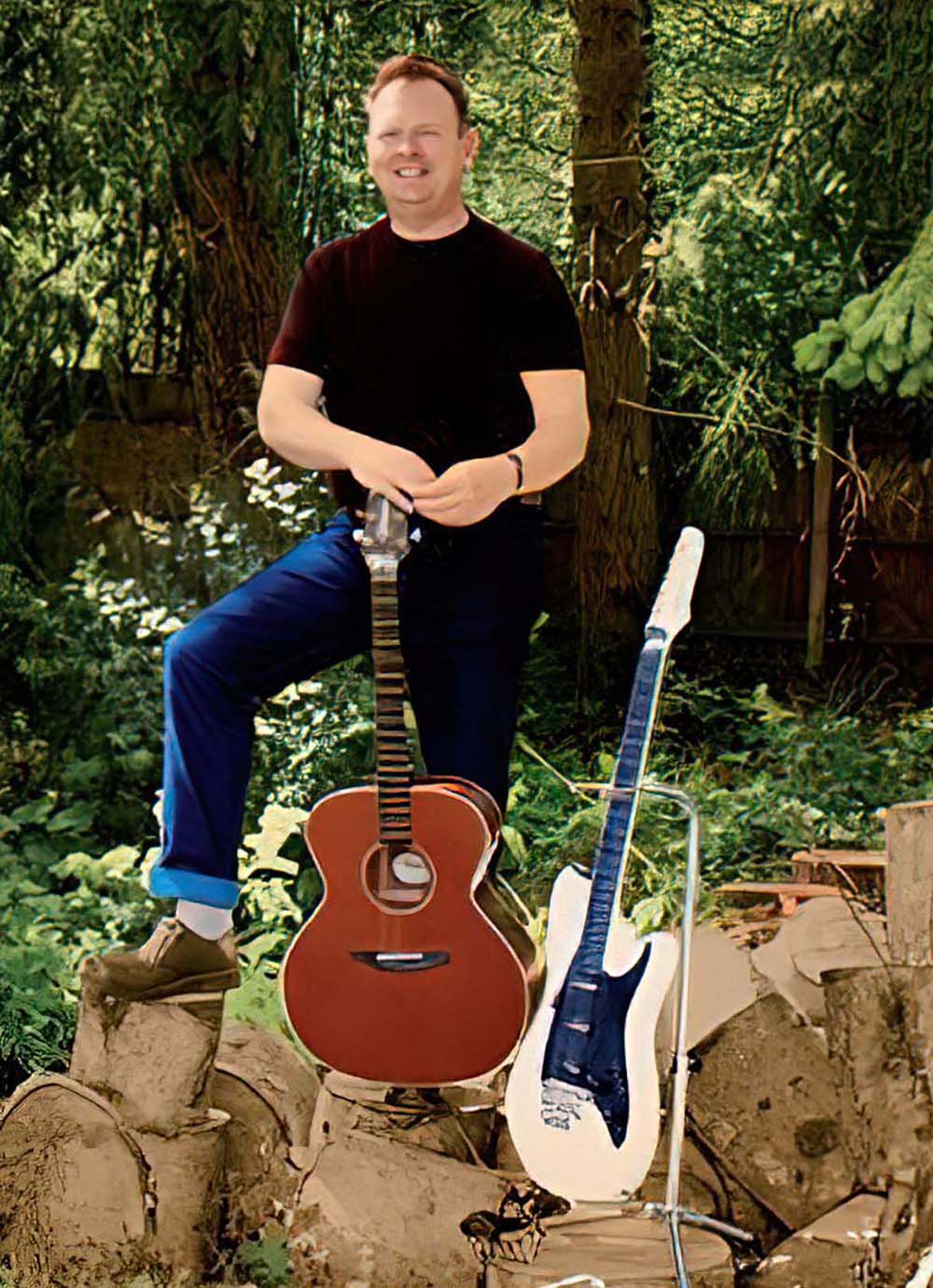
More recently he has been a member of Americana-Folk artist Vera Van Heeringen’s trio, touring UK/Europe and playing on all her albums to date. He joined The Clint Bradley Band in 2015. He still play regular gigs with Chuck Micallef. They released a duo album, Shadows & Light in 2016. His latest new project is a Mid Wales based duo, Home Of The Free, with Alex Valentine. They are currently recording an album for release in 2024.
Connie Everard made her stage debut at the age of 7. Although she started playing electric bass as a child this gave her a good grounding for the notes when she came to make the transition to double bass. Her roots are rockabilly and she was a member Portsmouth rock ‘n’ roll band Rock Therapy for 30 years, and they got to back artists like Sleepy LaBeef and Buddy Knox. She also worked some of the big doo wop acts like the Flamingos and the Drifters at the Hemsby rock ‘n’ roll weekenders. Connie joined The Clint Bradley Band in 2013.
Danny Kelly first teamed up with Clint Bradley as a member of Little Tony & the Tennessee Rebels. When the band folded in 1980 he joined a popular rockabilly band The Flying Saucers who were signed to EMI at the time and had minor chart success with the single Some Like It Hot in 1981. It was taken from their album Flying Saucers. On the album the drums were credited to Rollin’ Danny a name that has stuck to this day in rock ‘n’ roll circles.
Danny got back with Clint in 1990 and been with him ever since. He also has his own rhythm and blues band called Southside UK. It’s an eight piece band with a three piece horn section playing mainly covers influenced by Tedeschi Trucks Band the US blues and blues rock band.